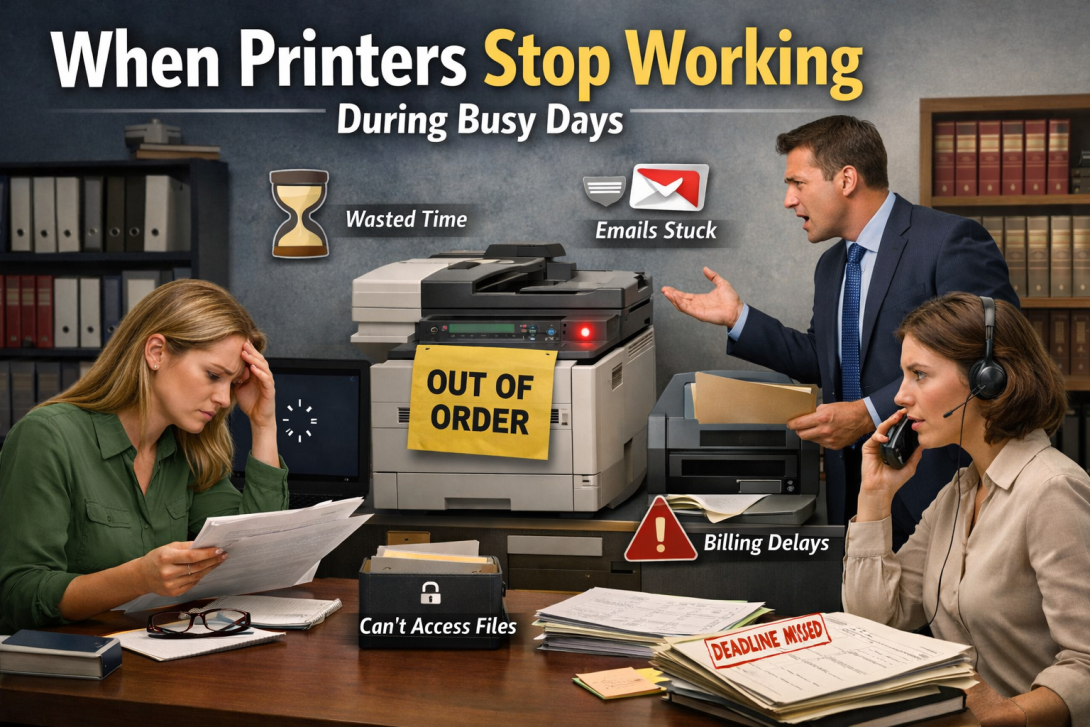
When the printer not working becomes the problem of the day, everything slows down. Printing, scanning, and copying are still part of daily operations for many New Jersey offices, especially for client documents, signatures, and filings. The trouble is that printer failures rarely happen alone. The computer slow becomes more noticeable, queues pile up, and staff start walking to other rooms trying different devices. Each attempt creates interruptions during a busy day, pulling attorneys, paralegals, and office managers away from billable work.
A broken printer creates a ripple effect across communication and workflow. If a form cannot be printed, it cannot be signed, scanned, or emailed back out. Then email not sending becomes the next frustration, or Outlook issues prevent quick follow-ups with clients. When someone cannot access files, they cannot even confirm which version should be printed, so the team risks sending the wrong document. Break-fix habits turn these moments into routine fire drills, but the cost shows up in missed deadlines, delayed invoicing, and clients who feel left waiting.
Here is a real-feeling scenario: A receptionist needs to print intake forms before a client arrives, but the printer not working and the computer slow makes every click lag. The paralegal tries to email a PDF instead, but Outlook issues keep prompting for a password and the email not sending leaves the client without instructions. Meanwhile, the attorney is asking for a file to review, but the team cannot access files on the shared folder. In fifteen minutes, the office has lost momentum and confidence.
Warning signs that break-fix is costing you more than you think:
- The printer fails repeatedly, and staff “babysit” print jobs to get them out
- Work pauses while people switch devices, cables, or restart computers
- Scanning and emailing become unreliable because Outlook issues keep returning
- Teams cannot access files quickly, so document versions get confused
- Billing and client updates get delayed due to constant interruptions
Reducing these problems starts with a practical network reliability plan and disciplined backup planning so documents and workflows do not depend on a single failing point.
Printer reliability is not only about convenience; it protects deadlines, client experience, and the steady flow of office work. A consultation focuses on finding the reasons printers fail during peak hours, preventing repeat breakdowns, and reducing the chain reaction that leads to slow computers, file access problems, and email delays. For New Jersey offices, stability is a competitive advantage because clients notice responsiveness and organization. If printer issues keep turning into office-wide disruptions, take the next step. Schedule a consultation.